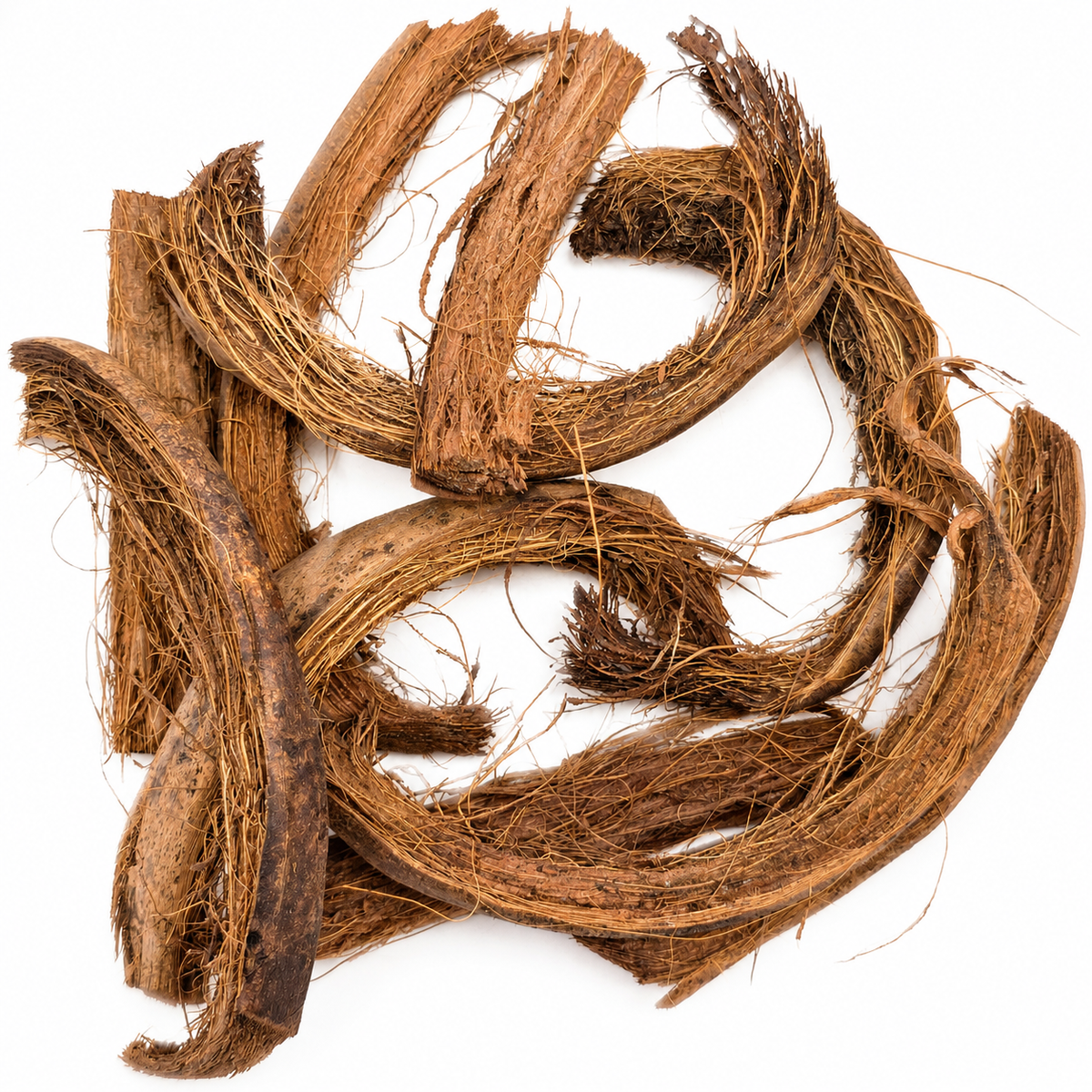
Coconut Husk
Coconut Husk
Couldn't load pickup availability
Coconut Husk pieces are curved sections of the fibrous outer husk of the coconut (Cocos nucifera). The palm is native from central Malesia, including Indonesia's Maluku islands, to the southwest Pacific, and is now grown on tropical coasts worldwide. Ours come from Indonesia. Each piece is a dense mat of coarse fibers curved into a shallow cup, giving the substrate a rough, layered texture. The fibers give bacteria, fungi, and biofilm plenty of surface to colonize, so shrimp and plecos graze them steadily. Coconut husk releases medium-to-high tannins for a warm amber tone and lasts a long time, roughly 3–12 months. It needs a long boil to waterlog. Partly bury pieces or scatter them between leaf litter for a natural forest-floor texture.
Habitat Snapshot
Key Benefits
- Medium–high tannins for a warm amber tone
- Fibrous surface builds biofilm for shrimp and plecos
- Long-lasting, roughly 3–12 months in the tank
- Curved, fibrous pieces add rough, layered texture to the substrate<
How to Use
Rinse thoroughly. Boil for at least 60 minutes to waterlog the fibers and start tannin release, then let the pieces cool in the water. If any still float, keep them soaking until they sink. Set them on the substrate, partly bury them, or layer them between leaf litter, using 3–4 pieces per 10 gal (38 L). Replace when they start to fall apart, usually within 3–12 months. Pairing: Surround with Catappa Leaves for a mixed litter bed with extra tint.
Best For
Shrimp colonies, plecos, wild bettas, fry tanks, and any blackwater or botanical tank where you want steady tannins and plenty of biofilm surface.
Not for human consumption. Preparation required. Because this is a natural product, size, shape, color, and texture will vary from piece to piece.
Let the botanical become part of the system. The value is in the slow breakdown, biofilm, tannin character, habitat texture, and natural behavior it encourages. This is where sunken forests come to life.
Share