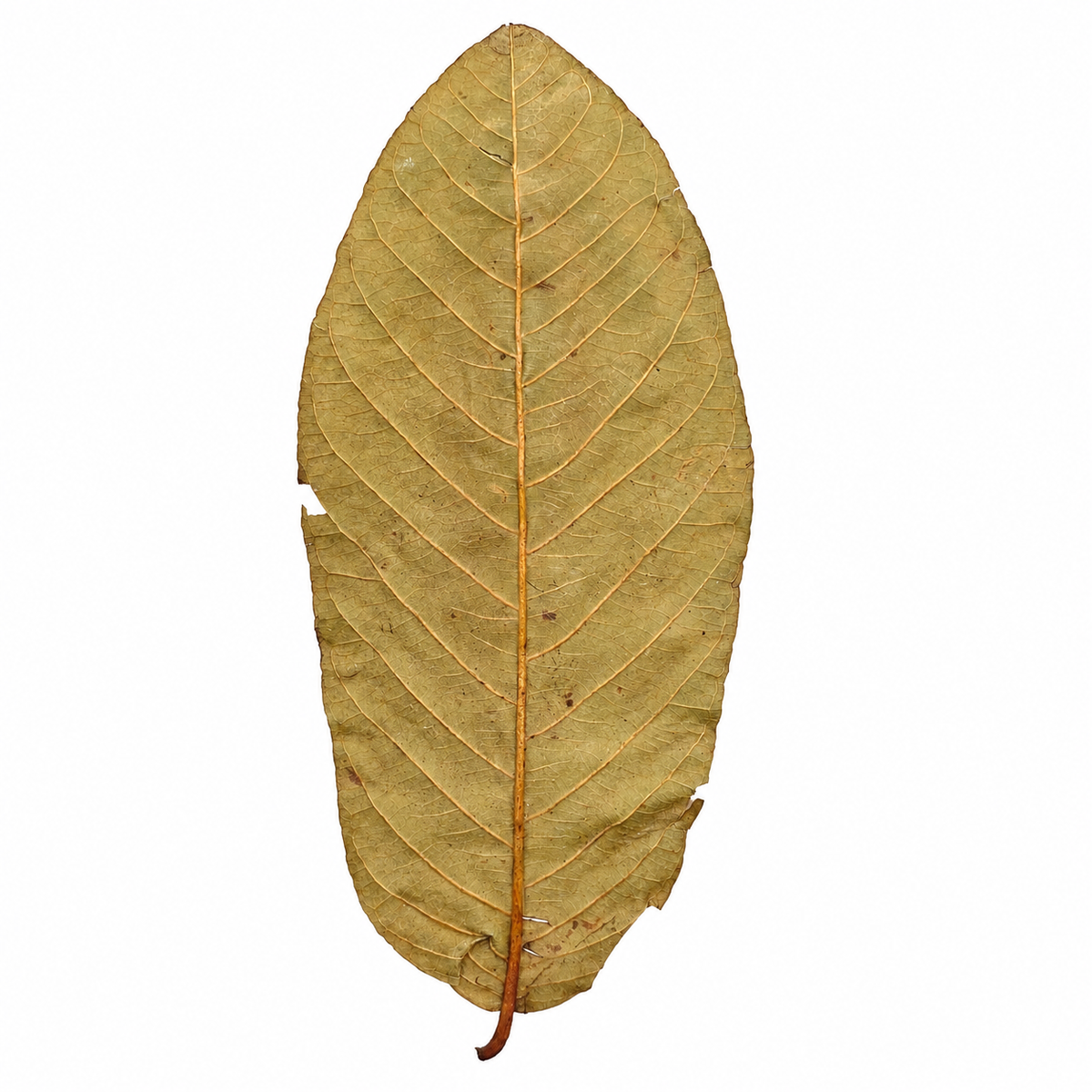
Guava Leaves
Guava Leaves
Couldn't load pickup availability
Complete the habitat


Guava Leaves come from Psidium guajava, a small tropical American tree cultivated for so long that its true wild range is uncertain. It's now grown throughout the tropics, and our leaves are sourced from Indonesia and Sri Lanka. The dried leaves are elliptic, about 7–15 cm (2.75–6 in) long, firm, and mid-brown with strong parallel veins. Once prepared, they sink and keep their shape for roughly 3–4 weeks, building a biofilm coat that shrimp and fry start grazing within the first week. Expect a medium amber tint that builds gradually instead of staining the water dark. Guava doesn't match one specific biotope, so use it as a general leaf-litter layer, not as a habitat recreation. It's a solid pick for shrimp keepers, fry tanks, and anyone who wants leaf litter that won't turn to mush in a week.
Habitat Snapshot
Key Benefits
- Firm leaf surface that grows biofilm within the first week
- Medium amber tint that builds slowly
- Holds its shape for about 3–4 weeks before softening
- Natural leaf-litter cover for shrimplets and fry
How to Use
Rinse to remove dust. Boil for at least 15 minutes, then let cool completely, and soak in clean water until the leaves sink. Use 7–10 leaves per 10 gal (38 L), adding them gradually in soft or low-KH water. Leave them in to break down fully, or replace them after about 3–4 weeks as they soften. Pairing: Layer over Jackfruit Leaves; the jackfruit holds the base while the guava breaks down and is replaced on top.
Best For
Shrimp colonies (Neocaridina, Caridina), fry-rearing tanks, betta and dwarf cichlid breeding setups, and botanical method aquariums where you want steady biofilm and leaf litter that holds its structure.
Not for human consumption. Preparation required. Because this is a natural product, size, shape, color, and texture will vary from piece to piece.
Let the botanical become part of the system. The value is in the slow breakdown, biofilm, tannin character, habitat texture, and natural behavior it encourages. This is where sunken forests come to life.